If water is spraying from a pipe, go to the main shut-off valve first. If the floor drain is backing up, stop using water in the house. Those two steps limit the damage while you work out what comes next. Below is why they work, and how to tell a true emergency from something that can wait for daylight.
The main shut-off is the first thing to find
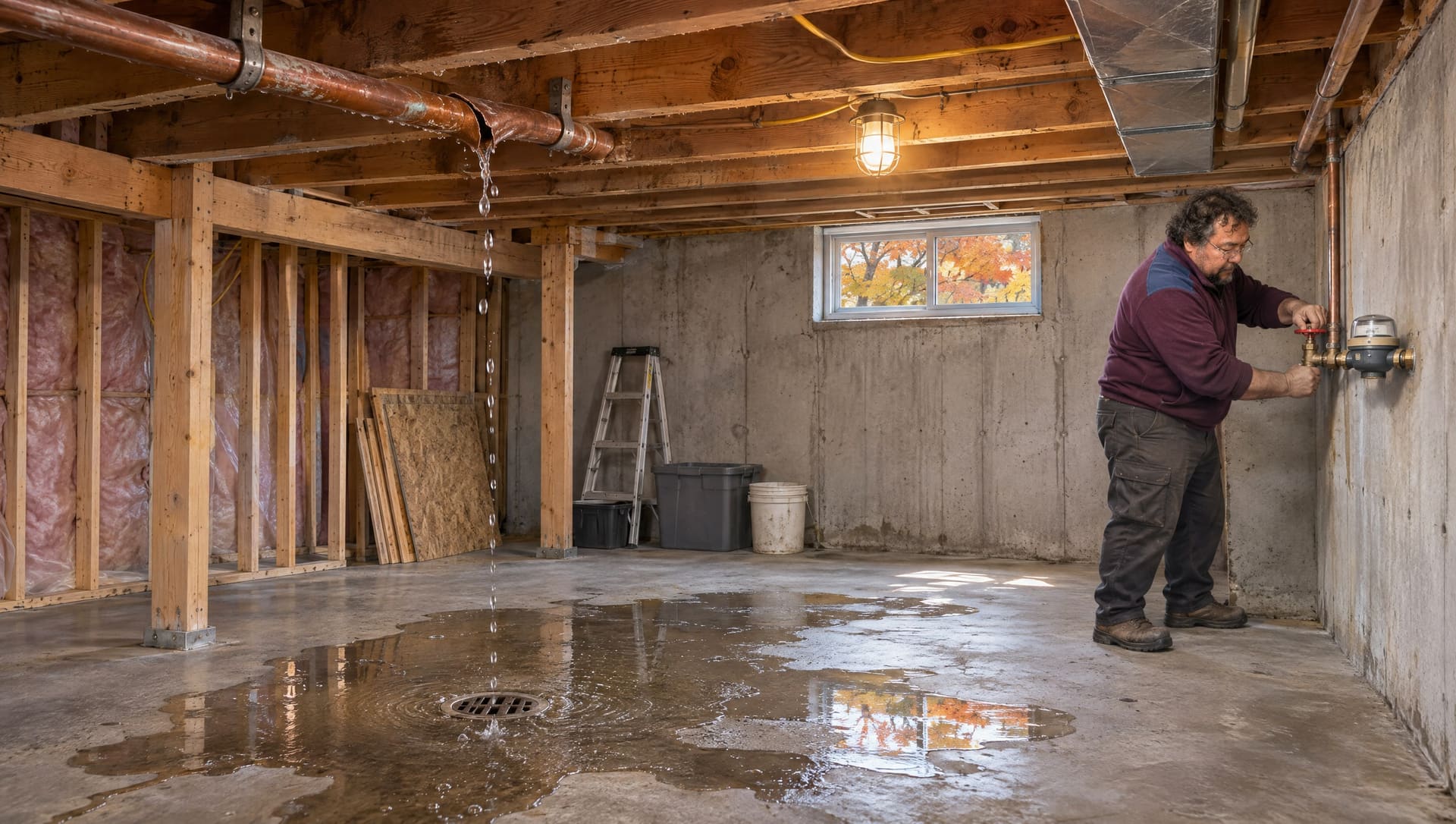
In most Tavistock houses the water line comes into the basement through the front wall or the floor, and the main shut-off sits close to the water meter. It is usually a round wheel handle or a lever on a short length of pipe.
- For a wheel handle, turn it clockwise until it stops. Do not force it past that point.
- For a lever, turn it a quarter turn so it sits across the pipe rather than along it.
- Once the main is off, open the lowest cold tap in the house, often a laundry tub or a basement sink, to drain the water still in the lines.
- If the burst is on a hot water line, turn the water heater off as well: the breaker for an electric heater, or the pilot or vacation setting on a gas one.
If the valve will not turn, or it turns but water keeps coming, tell the plumber when you call. Older valves seize after years of sitting open, especially in the oldest houses on streets such as Hope Street West and Woodstock Street North.
It helps to find the valve now, on an ordinary day, and make sure everyone in the house knows where it is.
Keep away from water near electricity
If water is reaching a light fixture, an outlet, a power bar or the electrical panel, do not walk through it. Turn off the breaker for that part of the house only if you can reach the panel from a dry spot. If you cannot, leave the area and call the electrical utility or the fire department. A wet floor can be dried, but electricity and standing water together should not wait.
A floor drain backing up means stop using water
The basement floor drain is usually the lowest opening in the house's drain system. When the line below it is blocked, water from every sink, shower, toilet and washing machine looks for the lowest way out, and that is the floor drain.
While you wait for help:
- Stop running the washing machine and dishwasher.
- Do not flush toilets or run showers.
- Ask everyone in the house to hold off on water until the line is cleared.
- Do not pour chemical drain cleaner into the floor drain. It rarely reaches a main line blockage and it makes the water unsafe for whoever clears the line.
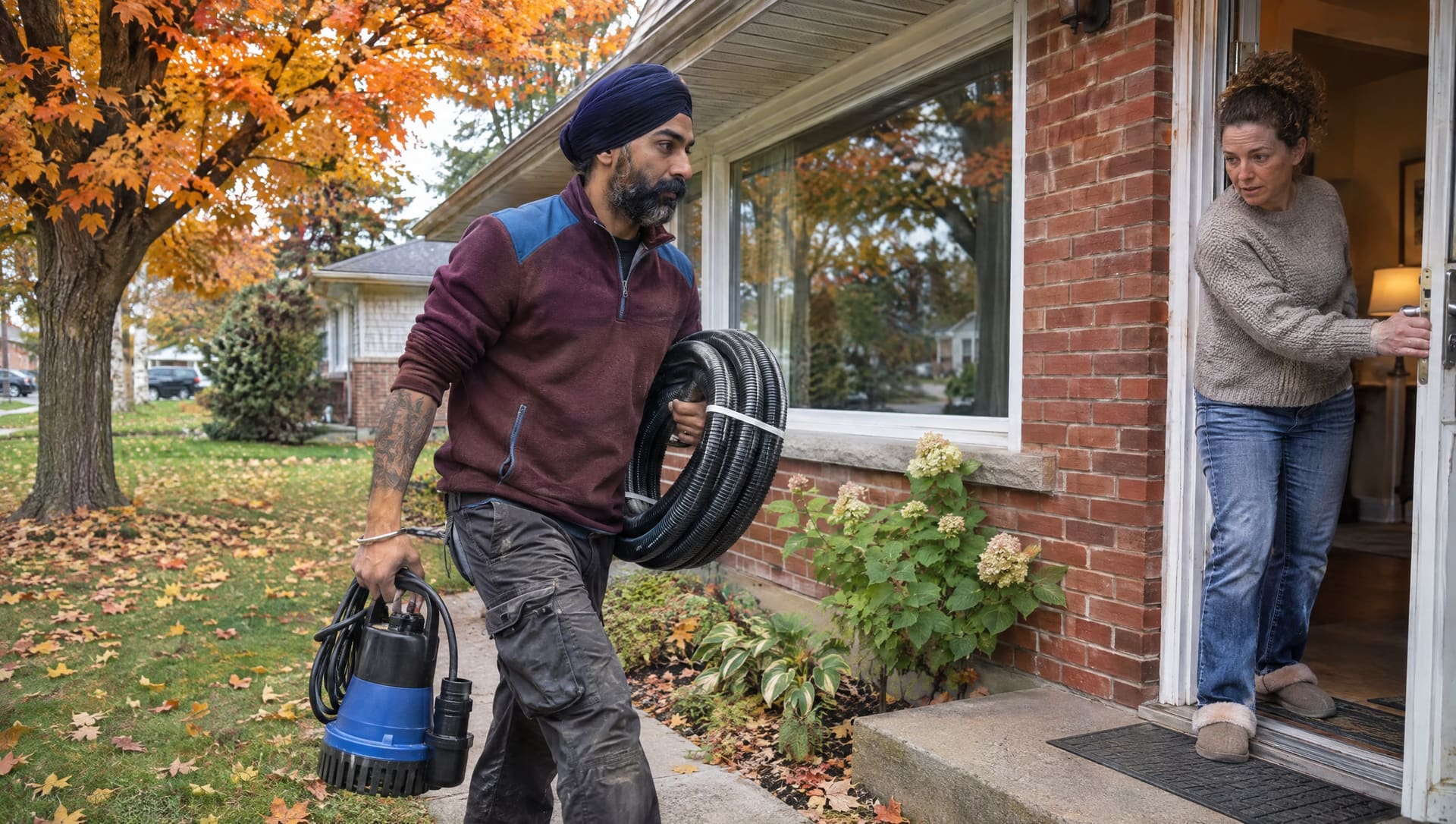
Ask a neighbour whether they are having the same trouble. Tavistock's wastewater is carried by a separated collection system, with three sewage pumping stations and about 22.5 kilometres of sanitary gravity sewer leading to the village's lagoon plant. If several houses on a street are backing up at once, the problem may be in the public sewer, and the municipality needs to know. If only your house is affected, the blockage is most likely in your own drain or the sewer lateral that runs under your lawn to the street.
Why the age of the house matters
Knowing roughly when a house was built tells a plumber where to look first, which makes the first visit calmer and shorter.
- The original village streets: houses built around the turn of the twentieth century often started with galvanized steel or lead water lines, cast-iron stacks and clay tile sewer laterals, with the floor drain tied straight to the sewer. Roots in the clay joints are a common cause of backups.
- The Ben-Der Subdivision: houses from the early 1970s on Bender Avenue, Homewood and Westwood usually have copper water lines and clay or early plastic laterals. Root intrusion at the lateral joints and worn valves are the usual trouble.
- Taylor Heights and The Orchards: newer houses have plastic drains and laterals and weeping tile that drains to a sump pump. Here, water on the basement floor is as likely to be a failed sump pump as a blocked drain.
Oxford County's sanitary sewer guidelines do not permit foundation drains, weeping tile or roof drainage to connect to the sanitary sewer. So in a newer house, groundwater around the foundation is meant to go to the sump, and if the sump stops, that water has nowhere to go.
What counts as an emergency
A plumbing emergency is anything that is putting water where it should not be and will keep doing so, or that leaves the house without a working drain or safe water.
Call now for:
- A burst or split pipe, including one that has frozen and thawed.
- A floor drain or toilet backing up with sewage.
- A leak you cannot stop with a local shut-off or the main valve.
- A sump pump that has stopped while water is rising in the pit.
- Water leaking from a water heater that you cannot isolate.
- Water near the electrical panel or wiring.
These can usually wait for a regular appointment:
- A dripping faucet.
- A toilet that runs on. Close the small valve behind it and it will stop.
- One slow sink or tub while the rest of the house drains normally.
- No hot water, as long as nothing is leaking.
- A small leak under a sink that stops once you close the valve below it.
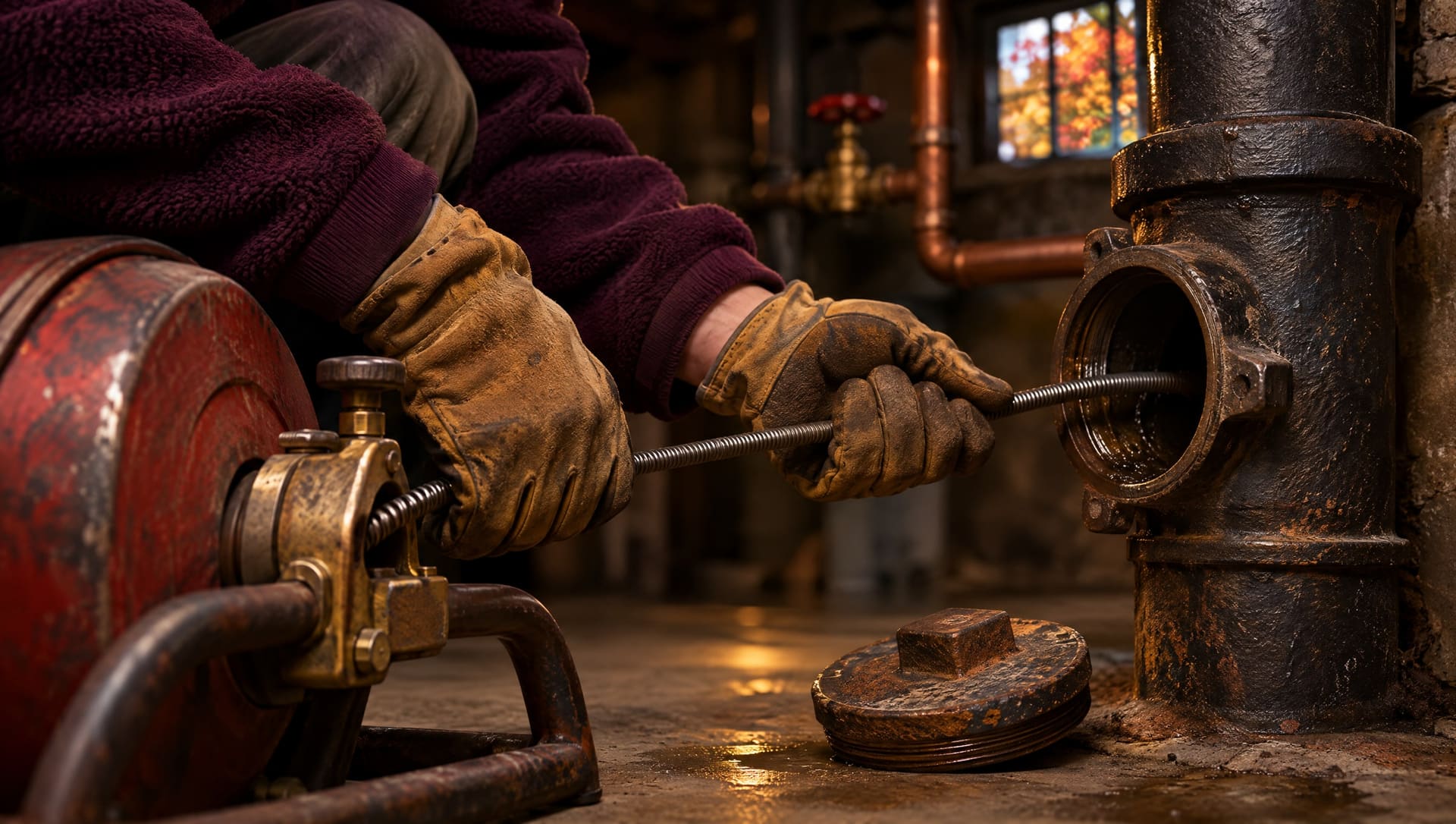
One slow fixture is almost always a local blockage. Several drains slowing at once, or the lowest drain in the house acting up, points to the main line, and that is worth booking soon, before it becomes a backup. Our guide on slow drains and sewer backups explains how a main line is cleared.
Who to call when a pipe bursts
Call a plumber. In Ontario, plumbing is a compulsory trade, trade code 306A, which means the person doing the work must hold a Certificate of Qualification or be a registered apprentice, and must appear on the Skilled Trades Ontario Public Register. You can check a name on that register yourself.
If the water has damaged ceilings, floors or belongings, call your home insurance company as well. Before you start cleaning up, take photos and short videos of the water, the pipe and anything damaged. Keep the broken section of pipe if a plumber removes it.
If the backup involves the street sewer, call the municipality too. Your side of the line is yours to repair, and the public sewer is theirs.
What happens once the water is stopped
Once the plumber arrives, the first job is to find the cause. For a burst pipe that means opening up enough to see the damaged section and checking the pipe either side of it. For a backup it usually means clearing the line, then running a camera down the lateral so you can watch what it shows: roots, a cracked clay joint, a sag, or a clear pipe.
You should get a written price for the repair before work starts. If the camera shows a lateral that will keep blocking, ask about sewer repair and a backwater valve. Ontario's Building Code requires backwater valves in new construction where fixtures sit below the street or the upstream sewer manhole, and many older basements in Tavistock were built before that rule. Fitting one is usually a planned job, done once the immediate problem is cleared.
Work is performed by licensed plumbers (306A Certificate of Qualification).
If water is somewhere it should not be right now, our emergency plumber page explains how to reach Tavistock Plumbing.