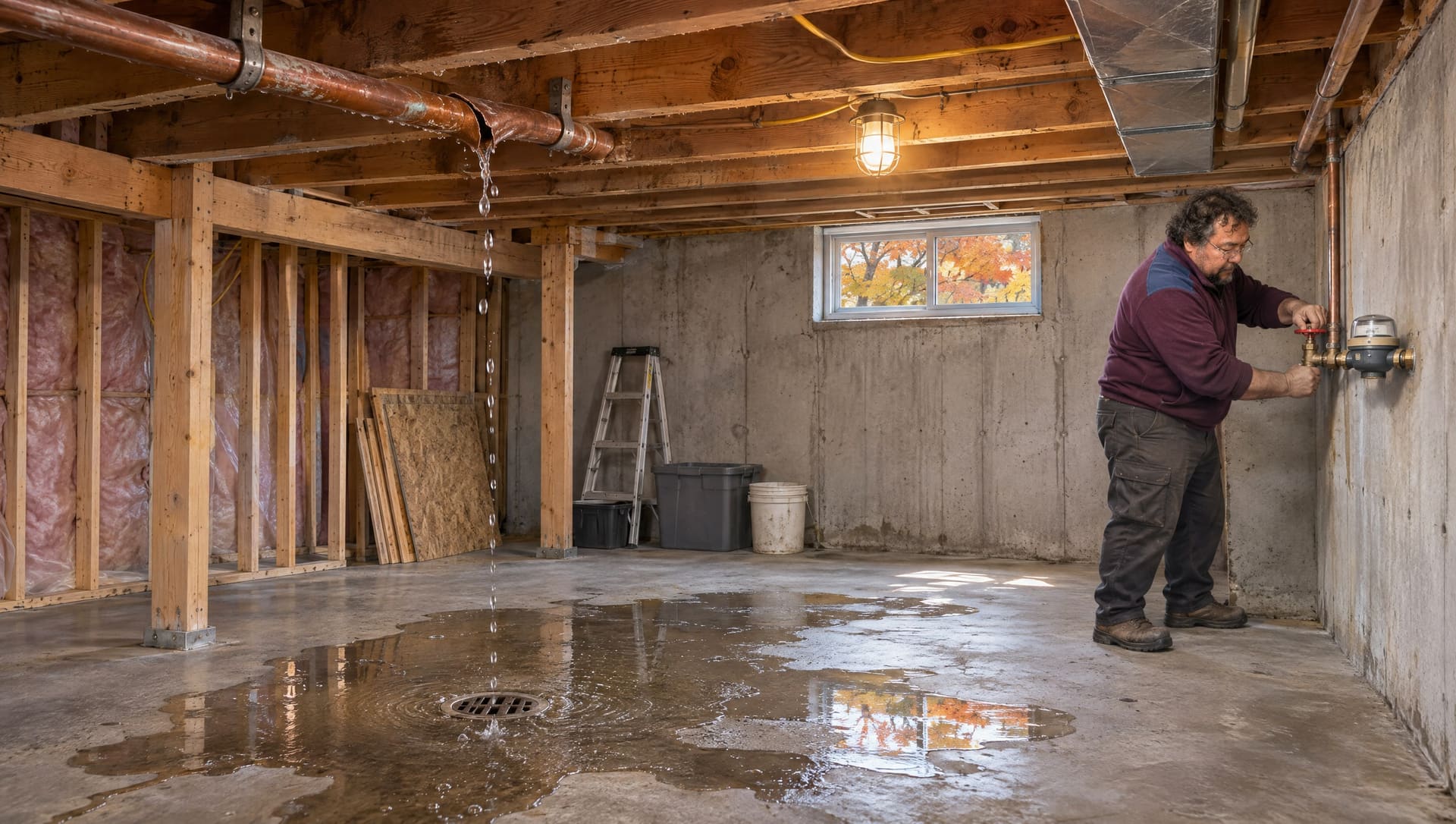

If a job is already open and water is where it should not be, stop there. Close the main shut-off where the water line enters the basement by turning it clockwise until it stops. Then open a low cold tap to drain the lines. Nothing else in this guide has to be decided tonight. If the floor drain is backing up or a pipe has split, our guide on what counts as an emergency covers the first steps.
With the water off, the rest is easier to think through. This guide covers who may do plumbing work in Ontario, when that work needs a permit, and what that means for a sump pump in a Tavistock basement.
Plumbing is a compulsory trade in Ontario
Plumber, trade code 306A, is a compulsory trade in Ontario. To practise it, a person must hold a Certificate of Qualification, a Provisional Certificate of Qualification, or a Registered Training Agreement as an apprentice. They must also appear on the Skilled Trades Ontario Public Register.
That rule is about who may practise plumbing as a trade. Ontario generally lets homeowners do plumbing in the house they own and live in. Being allowed to do the work does not exempt you from the rules, though. The work still has to meet the Building Code, and some jobs still need a permit.
If you pay someone else to do plumbing, they must hold the certificate or be a registered apprentice working under the proper supervision. You can look up a name on the public register before the work starts. On our jobs, work is performed by licensed plumbers (306A Certificate of Qualification).
The Building Code applies to everyone who does the work
Plumbing design and installation in Ontario is governed by Part 7 (Plumbing) of the Building Code, Ontario Regulation 163/24, made under the Building Code Act, 1992. It sets out pipe sizes, venting, traps, slopes, backflow protection and much more.
The code applies whether a homeowner or a plumber did the work. A drain without a proper vent or trap causes the same problems either way, and this is where most do-it-yourself work goes wrong. The joint holds, but the drain gurgles, siphons its trap or lets sewer gas into the room.
When a permit is usually needed
Under the Building Code Act, 1992, a permit from the municipality's chief building official is needed to construct a building. The Act's definitions include installing, extending, or materially altering or repairing plumbing. In plain terms, new plumbing and changes to drains generally need a building permit.
Jobs that usually fall on the permit side include:
- Adding a bathroom, a laundry or a basement fixture that did not exist before
- Moving a sink, toilet or shower to a new spot on the drain
- Replacing or rerouting drain, waste or vent piping
- Installing a backwater valve in the building drain
- Running new water lines to a new part of the house
Jobs that usually do not need one include replacing a faucet, toilet or fill valve in the same spot, swapping a trap under a sink, or fixing a dripping cartridge. The municipal building department decides for any given job, and a short call to them before you start costs nothing.
What is reasonable to do yourself
Plenty of everyday repairs are within reach of a careful homeowner:
- Replacing a toilet flapper or fill valve
- Changing a faucet cartridge or aerator
- Swapping a shower head
- Cleaning or replacing a sink trap
- Replacing a supply hose to a toilet or faucet
All of these replace a part in the same place, on the fixture side of the shut-off, without touching the drain system behind the wall.
What is better left to a plumber
Some work is harder to get right, or carries more risk if it goes wrong:
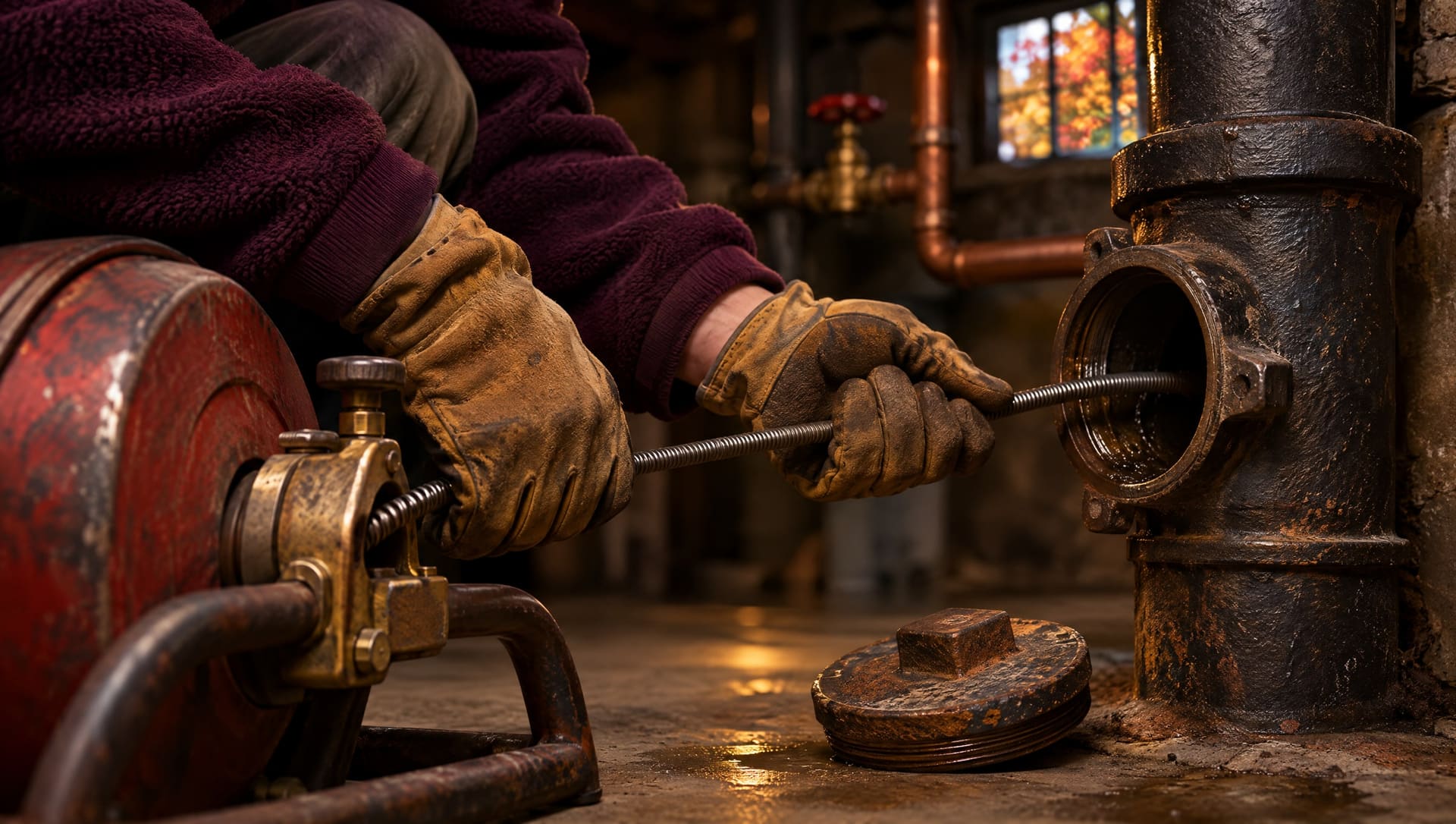
- Anything on the main building drain, the cleanout or the sewer lateral under the yard
- Backwater valves, which have to be sized and placed correctly to work
- Water heaters, including the mixing valve that keeps a shower or tub at or below 49 °C, the limit set in Part 7 of the Building Code
- Old galvanized or lead water lines in the village's oldest houses, which can crack further when disturbed
Gas is not homeowner work at all. Ontario Regulation 212/01 (Gaseous Fuels) requires fuel-fired appliances to be installed and serviced by a registered contractor using qualified gas technicians. On our jobs, including gas water heaters, gas work is performed by TSSA-certified gas technicians.
Are sump pumps required by code in Ontario?
There is no simple rule that every Ontario house must have a sump pump. Whether a house has one depends on how its foundation was built to drain, and on where that water is allowed to go.
In Tavistock, that mostly depends on the age of the house:
- The oldest houses on the original village streets, such as Hope Street West and Woodstock Street North, were usually built with a basement floor drain tied to the sewer and no sump pump at all.
- Houses in the Ben-Der Subdivision, on streets such as Bender Avenue, Homewood and Westwood, often have weeping tile tied to the sewer or to a sump.
- The newest houses, in Taylor Heights and The Orchards, typically drain their weeping tile to a sump pump.
The reason for the sump in newer houses is local. Oxford County's sanitary sewer design guidelines do not permit foundation drains, weeping tile or roof drainage to enter the sanitary sewer. The village's sewers run to a lagoon system through a nominally separated collection system, and groundwater in it takes up capacity meant for sewage. The sump pump sends foundation water somewhere other than the sewer.
Do you need a plumber to replace a sump pump?
Often, no. Swapping a failed pump for a similar one in the same pit, on the same discharge line, plugged into the same outlet, is a job many homeowners handle. Unplug the old pump first, note how the check valve sits, and test the new pump by filling the pit with a bucket of water before you leave it.
Call a plumber, or the building department, when the job is more than a swap:
- The pit is cracked, too small, or needs to be dug new
- The discharge line has to be moved or replaced
- Weeping tile is being redirected from the sewer to a sump, which changes the drainage and usually needs a permit
- The outlet is missing, shared or needs new wiring, which is electrical work
In every case, do not route sump discharge into a floor drain, laundry tub or any sanitary line. That is the connection the county rules out.
A tested pump before the spring melt and a battery backup for power cuts are both worth having. Neither has to be done tonight, but both should be on the list.
Before anyone digs
If a job means digging in the yard, for a lateral or a new discharge line, request a locate first through Ontario Dig Authority, formerly Ontario One Call. The request is free. Public locates do not cover private lines such as your own sewer lateral, so the location of that pipe has to come from records, a camera or a plumber.
What can wait and what cannot
A dripping faucet or a running toilet can wait for a quiet weekend. A sump that will not start with water rising in the pit, or a drain backing up into the basement, cannot. For the jobs in between, the building department's answer on the permit and a written price for the work give you something concrete to decide on.
If you would rather hand the sump work to someone else, see our sump pump service.