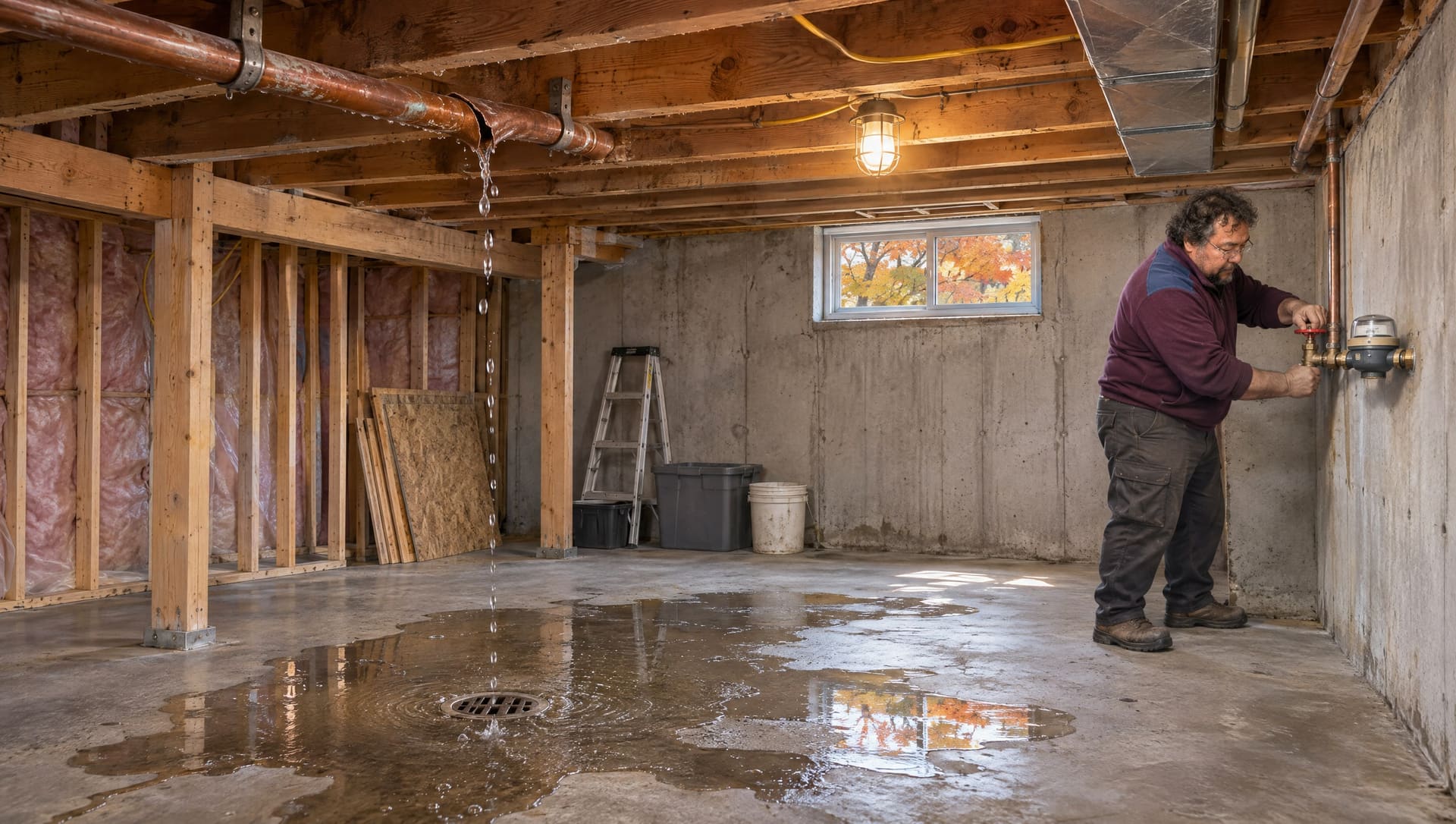
If water is coming up through the basement floor drain, stop using water in the house. That means no laundry, no dishwasher, no showers and no flushing until the line is clear. Whatever goes down a sink upstairs has to pass the blockage, and if it cannot, it comes out at the lowest opening, which is usually the floor drain. Move boxes and anything that soaks up water off the floor, and keep children and pets away from the wet area.
If only one sink or tub is slow, there is no need to stop everything. That is almost always a clog close to the fixture, and it can wait for a convenient time.
One slow drain is local, several at once is the main line
The pattern tells you most of what you need to know before anyone opens a cleanout.
- One kitchen sink draining slowly: usually grease and food in the trap or the branch pipe behind the wall.
- One tub or shower: hair and soap, usually within a short distance of the drain.
- A toilet that gurgles when the washer empties, or a tub that drains slowly when the toilet is flushed: the water is looking for room further down, which points to the main line.
- The basement floor drain backing up, or water rising in it after laundry: the main line or the sewer lateral that runs under the yard to the street.
A single slow fixture can be cleared on your schedule. A main line that is backing up is the one to deal with now, because sewage in a basement is a health issue as well as a mess. Neither situation calls for panic, but it helps to know which one you have.
Yes, a sewer line can back up
The pipe from your house to the street, called the sewer lateral, is the homeowner's responsibility on the private side. When it narrows or blocks, wastewater from the house has nowhere to go. In Tavistock, the house's age is a good guide to why.
The oldest houses on the village's original streets, such as Hope Street West and Woodstock Street North, date from around the turn of the twentieth century. Houses of that age in Ontario were typically built with clay tile sewer laterals and a basement floor drain tied straight into the sewer. Clay pipe comes in short sections, and tree roots find the joints. Over the years the roots fill the pipe, paper and grease catch on them, and the line backs up.
In the Ben-Der Subdivision in the east of the village, on streets such as Bender Avenue, Homewood and Westwood, the houses date from the early 1970s. Laterals of that era in Ontario are often clay or early plastic, and root intrusion at the joints is the usual cause of a recurring backup.
In the newest subdivisions, including Taylor Heights and The Orchards, the drains and laterals are plastic. Roots are much less of a problem. Blockages there tend to come from what goes down the drain: wipes, grease, construction debris left from the build, or a sag in the line.
Tavistock's sanitary sewers are a separated system, meaning the pipes under the street are meant to carry household wastewater only, not rain. Oxford County's 2021 annual report describes the village's collection system as nominally separated, with three sewage pumping stations and 22.5 kilometres of sanitary gravity sewers feeding a lagoon system. Oxford County's sewer design guidelines also do not permit foundation drains, weeping tile or roof drainage to connect to the sanitary sewer. If an older house still has a downspout or weeping tile tied into the sanitary line, that extra water during a heavy rain or the spring melt can be part of why a floor drain misbehaves. It is worth asking about on any sewer visit.
Why plumbers say not to use chemical drain cleaner
It is understandable to reach for a bottle first, but most plumbers would rather you did not, for these reasons.
- It rarely reaches the real blockage. A clog in the main line can be many metres from the drain you poured into. The chemical sits in the trap or the branch pipe and does little where it matters.
- It does not remove roots. Roots in a clay joint are not dissolved by a single dose, and even if some die back, the opening in the joint is still there.
- It is hard on older pipe. In a house with original cast-iron or galvanized drains, strong chemicals add to corrosion that is already under way. Repeated use on an ageing pipe can turn a clog into a leak.
- It makes the next step less safe. If the drain is still blocked, it is now full of caustic water. Whoever opens the trap or runs a cable into it, you or a plumber, is working with a chemical that burns skin and eyes. Tell the plumber if you have used any, and what it was.
For a slow sink or tub, try the plain steps first: clean the strainer and stopper, use a cup plunger on a sink or tub (block the overflow with a wet cloth), and remove and rinse the trap under a bathroom sink if you are comfortable doing so with a bucket underneath. Hot water from the kettle helps with fresh grease in a kitchen sink. If these do not work, the clog is further along than you can reach.
What plumbers use to clear drains
The tool depends on where the blockage is and what the pipe is made of.
- A hand auger or small drum machine for sink, tub and toilet branches.
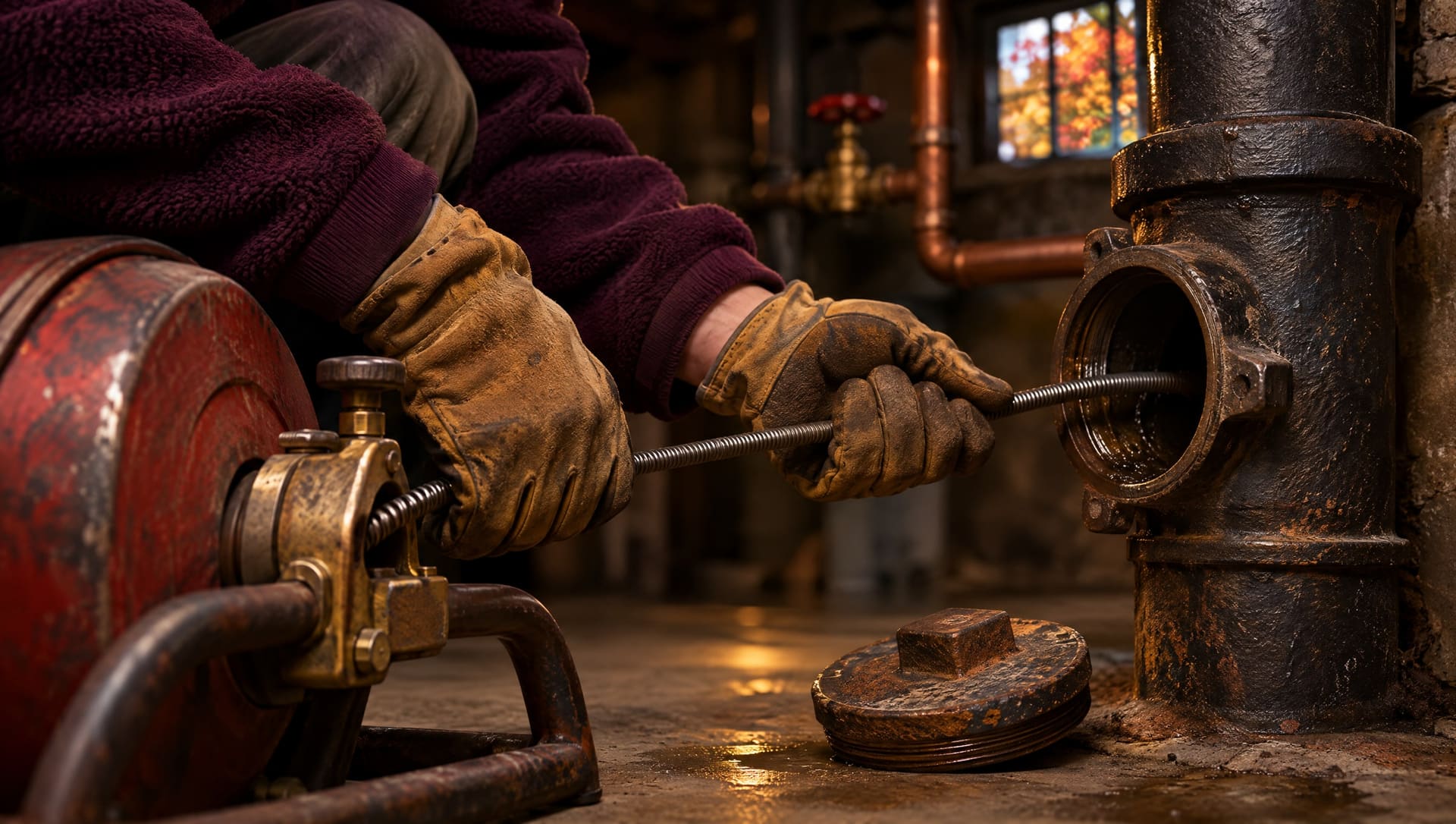
- A larger cable machine with cutting heads for the main line. It is fed in through a cleanout, the capped fitting on the main drain in the basement, and cuts through roots and packed debris.
- High-pressure water jetting, which scours grease and sludge off the pipe walls rather than just punching a hole through them. It suits grease-heavy lines and plastic pipe well.
- A sewer camera, run down the line after it is cleared.
The camera shows whether the line is clear, whether roots are coming in at a joint, whether a section of clay has cracked or shifted, or whether a plastic line has a low spot where water sits. You can watch the footage yourself and see the same thing the plumber sees.
The best way to clean a main sewer line
There is no single best tool. The steady approach is to clear the line, then look at it. If the camera shows sound pipe and the blockage was grease, wipes or a one-off, clearing it is the whole job. If it shows roots at the joints of a clay lateral, or a broken section, cleaning will buy time but the roots will come back. At that point the choice is between scheduled cleaning and repairing or replacing the damaged section, and you should get a written price for each so you can compare them.
Repairs to a sewer lateral usually involve digging, and in Ontario a locate must be requested through Ontario Dig Authority before any digging. Public locates do not mark private lines such as your own sewer, which is another reason the camera is useful: it can help find where the pipe runs and how deep. Changes to drains generally need a building permit from the municipality, and Ontario's Building Code requires a backwater valve in new construction where fixtures sit below the level of the street or the upstream sanitary manhole cover. For a house that has backed up before, a backwater valve is worth discussing. The sewer repair and backwater valve page explains how that works.
How often drain pipes should be cleaned
Most drains in good condition do not need routine cleaning. A plastic main line in a newer Tavistock house may go its whole life without needing a cable, provided wipes and grease stay out of it.
The exceptions are older lines with a known problem. If the camera has shown roots in a clay lateral, a cleaning on a regular schedule, before the line blocks rather than after, is a reasonable way to manage it until you decide on a repair. The right interval depends on how fast the roots return, and a plumber can judge that from what the cable brings back over a couple of visits.
A few habits help in any house:
- Wipe grease out of pans into the garbage before washing them.
- Flush only toilet paper. Wipes labelled flushable still catch in pipes.
- Use strainers in tubs and showers.
- Know where your main cleanout is, and keep the area around it clear.
If your floor drain is backing up or several fixtures are slow at once, our drain cleaning service clears the line, runs the camera and gives you a written price before any work starts.